DEVOLUTION(X)
A research and development platform exploring RF-native detection, response, and forensic workflows—designed to extend SOC visibility into the electromagnetic domain.
DEVELOPMENT STATUS: Devolution(x) is currently in active development. Capabilities described reflect ongoing prototype work and experimental systems rather than a released product.
WHAT RF-NDR MEANS
RF-NDR extends detection and response into the electromagnetic domain—where signals may be transient, non-cooperative, encrypted, proprietary, or intentionally evasive.
Spectrum Baselining
Continuous monitoring and anomaly detection to establish normal operating patterns.
Signal Behavior Analysis
Analysis beyond "known protocols" to identify suspicious transmission characteristics.
Investigative Workflows
Structured processes driven by RF evidence and forensic data capture.
Security Correlation
Correlation opportunities with traditional security telemetry when available.
WHAT RF-SOC MEANS
A Spectrum Operations Center (RF-SOC) applies SOC discipline to RF operations, moving away from ad-hoc analysis to structured defense.
CAPABILITY AREAS (IN DEVELOPMENT)
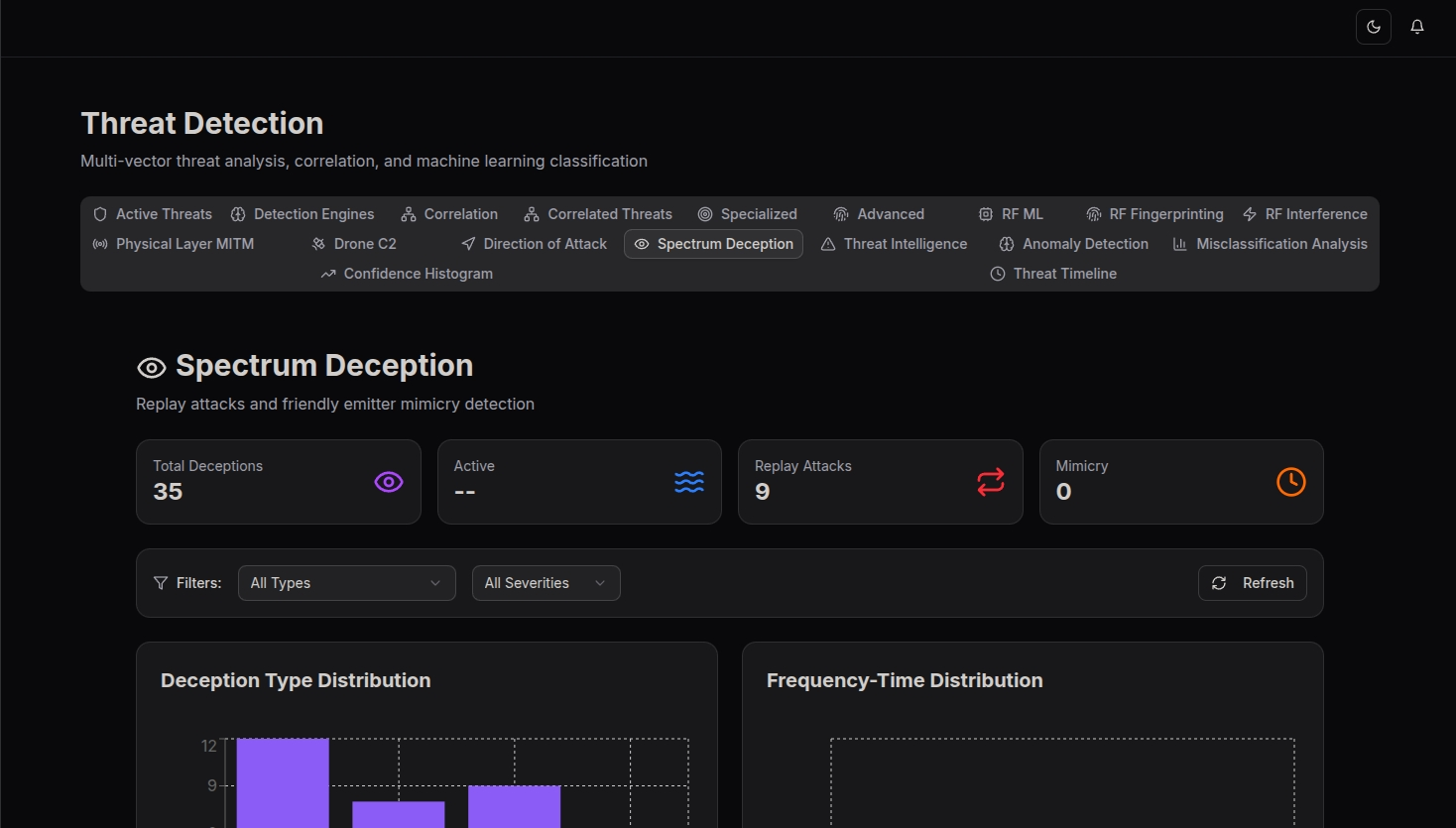
AI-Driven RF Threat Detection
Advanced detection logic utilizing RF Machine Learning (RFML) to identify anomalous and suspicious activity beyond standard protocol signatures.
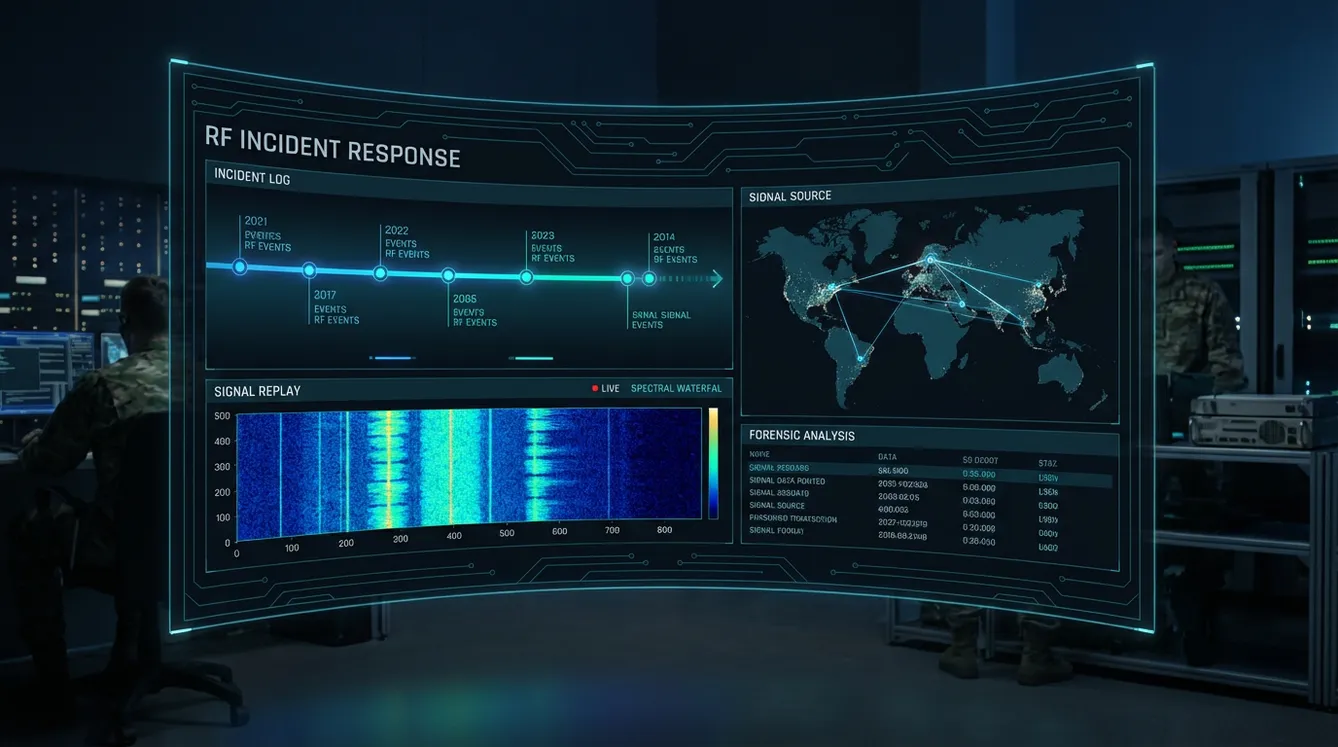
RF Incident Response
Experimental workflows to triage RF events, pivot into captured data, replay activity, and document findings.
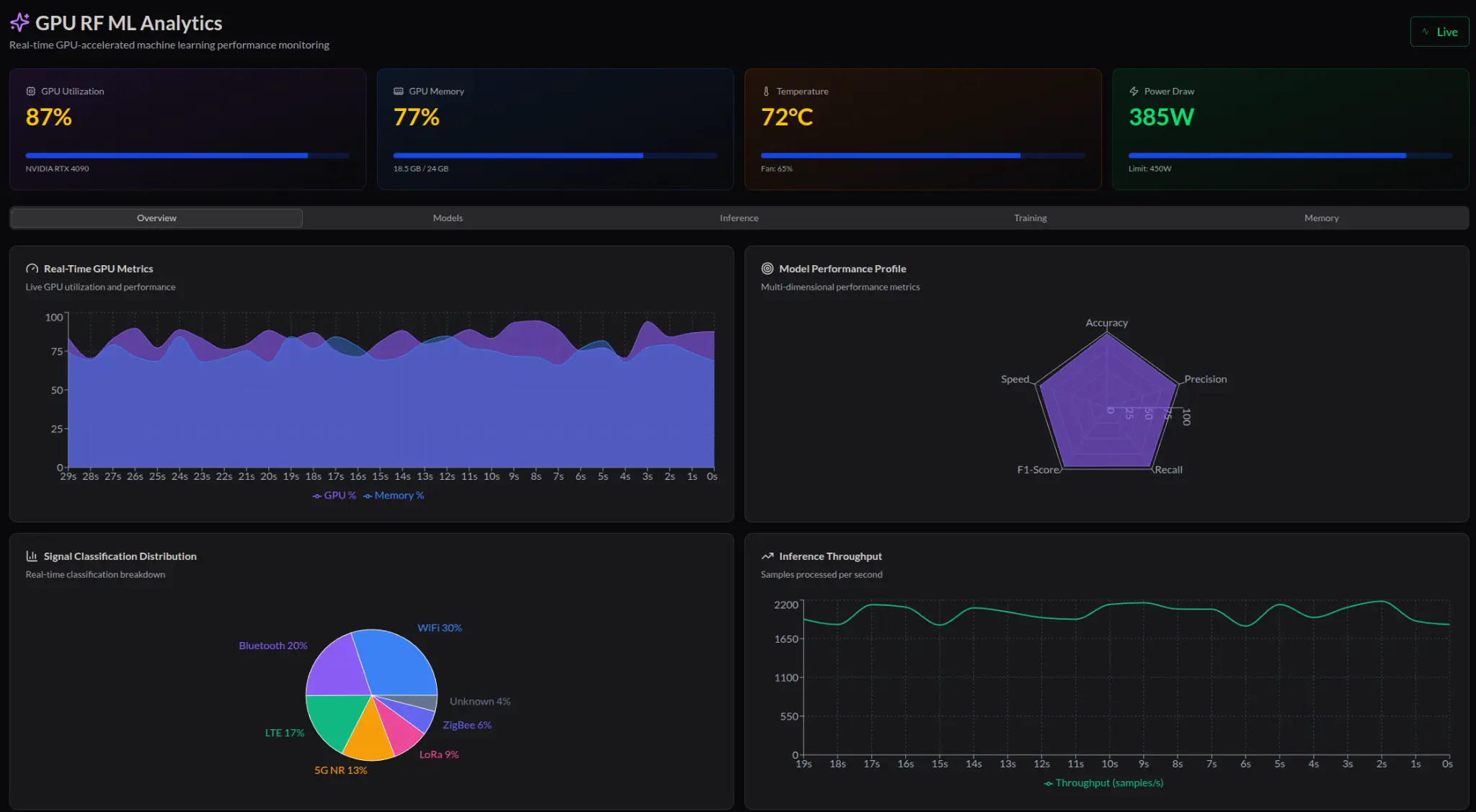
GPU-Accelerated Analytics
In-development pipelines leveraging modern GPUs for scalable RF processing and feature extraction.
AI-Assisted RF Attribution
Exploration of models that support analyst reasoning with confidence, context, and interpretability. Explainable by design.
Forensic Capture & Replay
Work toward chain-of-custody-aligned recording, replay, and reporting for RF investigations.
Distributed Sensing & Fusion
Research track exploring multi-node correlation concepts, synchronization, and fused operational views.
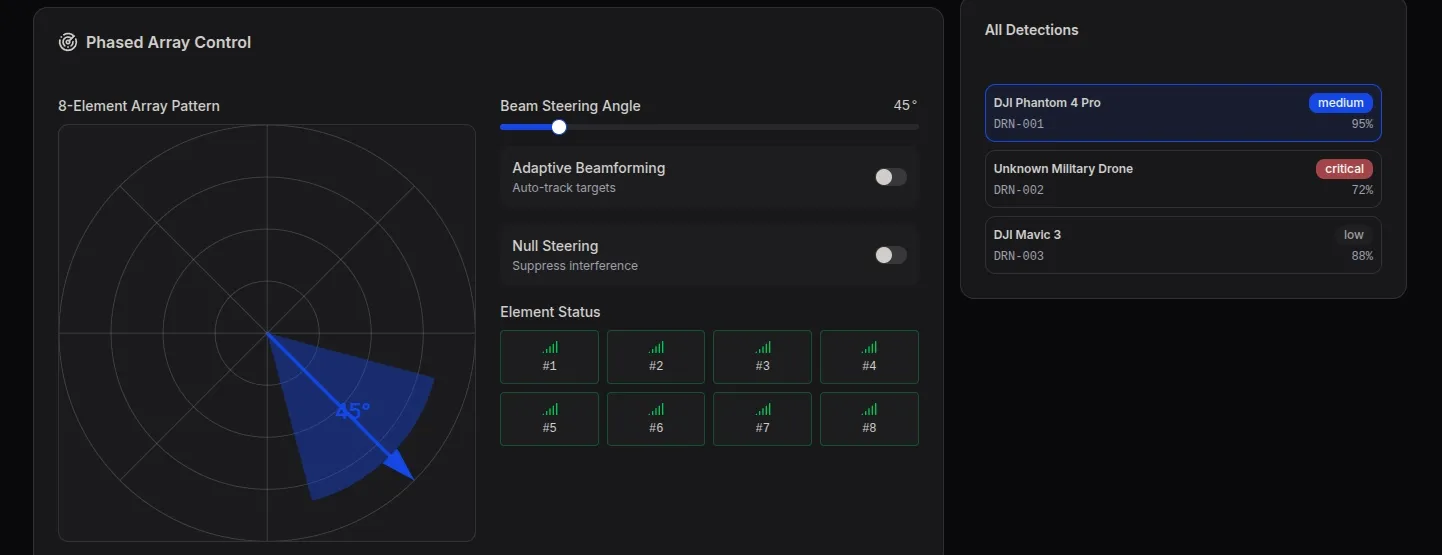
COUNTER-DRONE OPERATIONS TRACK
Devolution(x) includes a counter-drone research track focused on RF-native detection and response workflows.
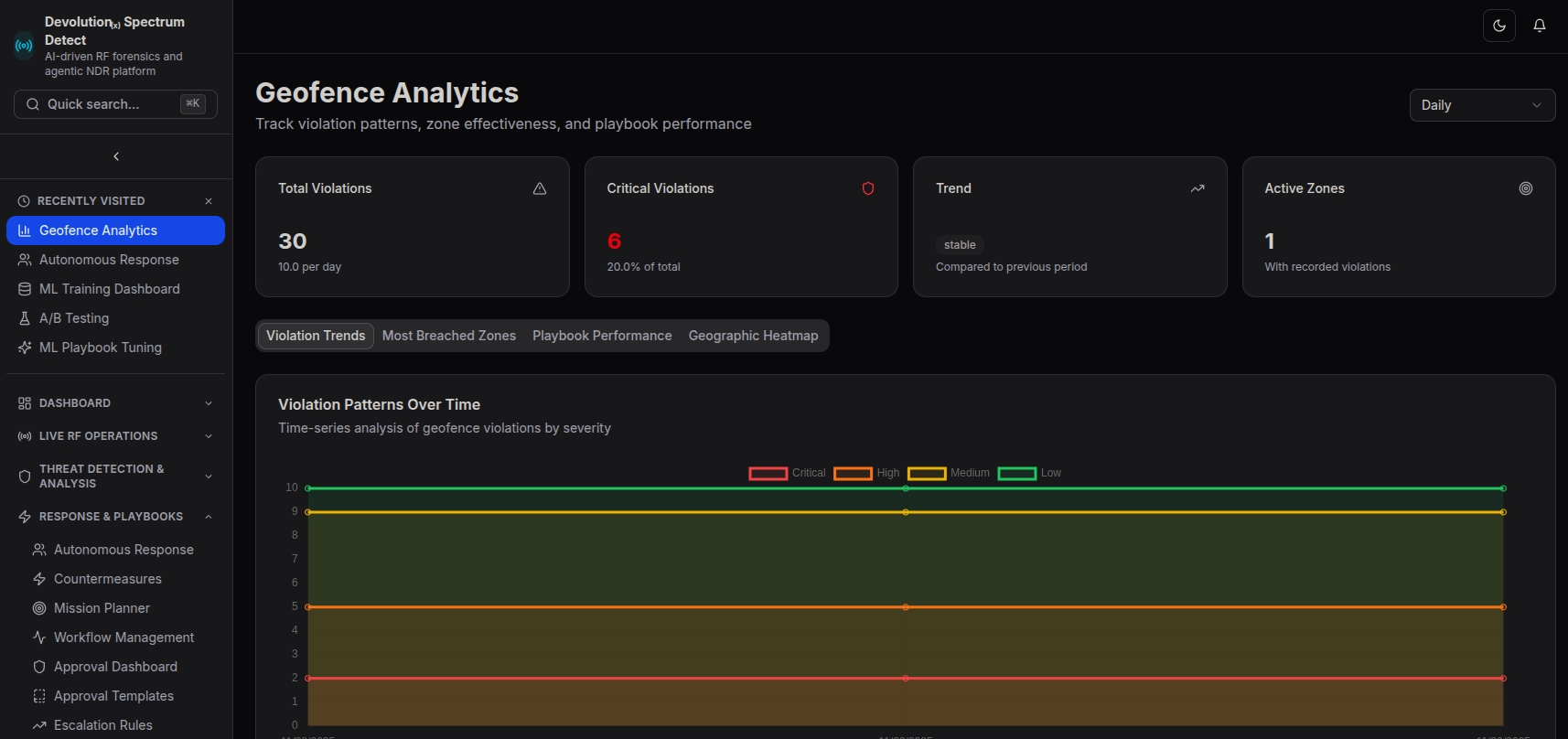
Geofencing
Protected-zone definition, alerting logic, and incident timelines tied to RF observations.
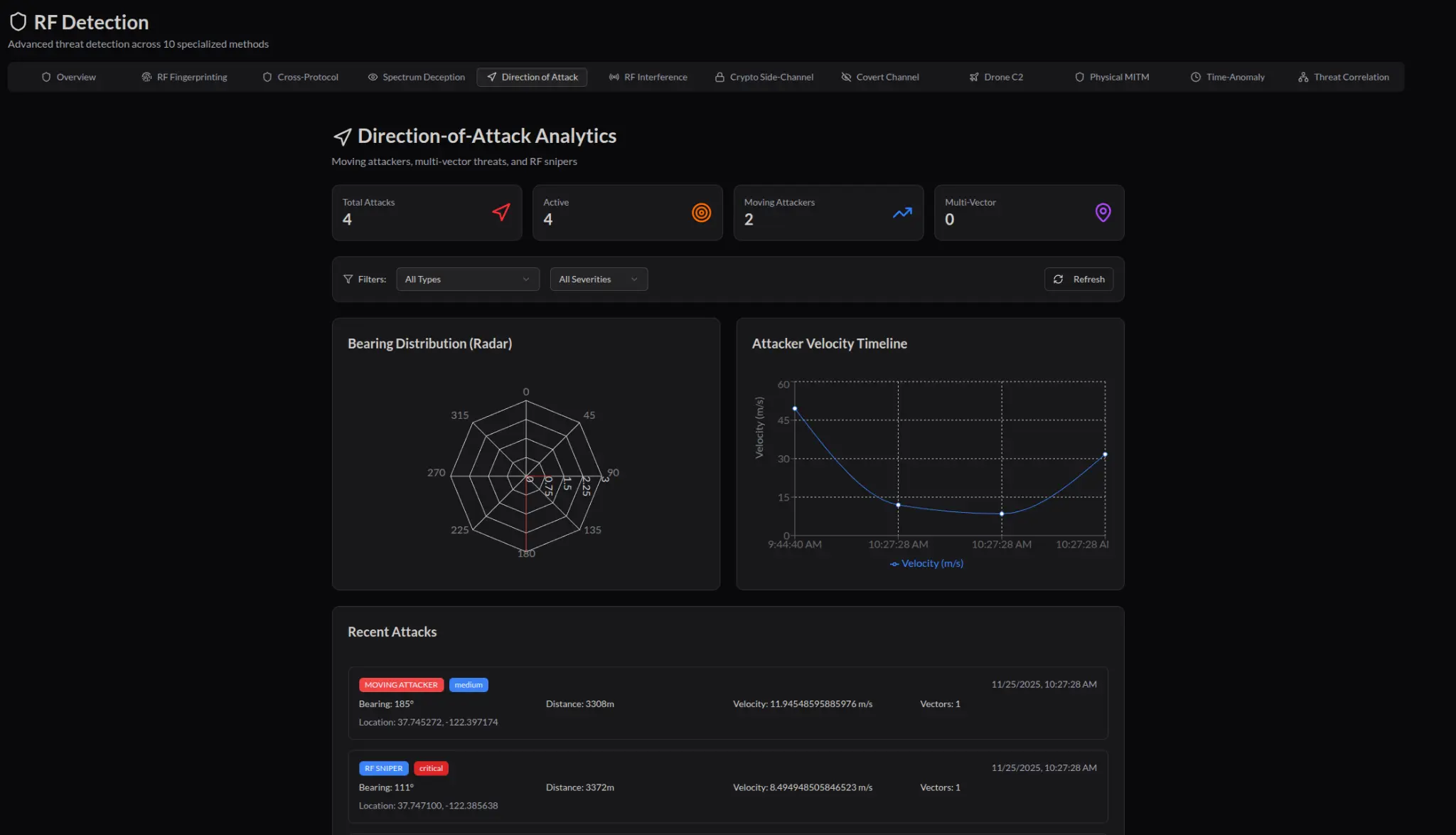
Direction Finding
Bearing estimation and localization concepts with confidence scoring and operator review.
Tracking & Correlation
Temporal tracking of drone-linked RF activity, including correlation across sensors and events.
Response Orchestration
Workflow support for response coordination, decision logging, and post-incident reporting.
COMPLIANCE & AUTHORIZATION
Devolution(x) counter-UAS capabilities are in active development. Any mitigation/neutralization activities are intended only for lawful, authorized use and may depend on jurisdiction, licensing, and operational authority.
Our focus is on response workflows that help operators move from detection to action—supporting coordination with authorized counter-UAS systems and documenting outcomes.
AGENTIC OPERATIONS LAYER
Devolution(x) explores an agentic operating model designed to support RF-NDR and RF-SOC workflows through bounded, role-aligned agents.
Agentic Blue Team
Assists with triage, enrichment, correlation, investigative pivots, and workflow consistency—supporting human decision-making.
Agentic Red Team
Models adversarial RF behavior and runs controlled simulations to validate detections and stress-test assumptions.
Agentic Platform Ops
Assists with operational readiness: sensor status, pipeline integrity checks, data quality validation, and system health visibility.
OVERSIGHT STATEMENT
Devolution(x) is designed with human oversight as a core requirement. Agentic components are intended to assist operators and analysts, not replace them.